



Handling multiple vehicle needs in a single service appointment is often a goal for car owners, and a great example is obtaining transmission fluid service as part of your vehicle’s regular maintenance schedule. How can you go about coordinating these two schedules and matching them up whenever possible?
At Tip Top Transmissions, we’re proud to offer both a wide range of transmission services and a variety of other auto shop solutions for drivers around Salt Lake City, ensuring your vehicle is in great shape all year round. Here are some basics on manufacturer recommendations for fluid service, plus how it’s helpful to know your transmission type and signs of possible fluid issues, so you can properly consider these needs within your overall vehicle maintenance schedule.
Knowing Your Transmission Type
For starters, it’s important to understand the type of transmission in your vehicle. This will influence what kind of fluid service you need and when it should be performed. There are two main types of transmissions: manual and automatic.
- Manual Transmission: This type uses a clutch system that requires the driver to manually shift gears using a stick shift. These transmissions typically require less maintenance, with recommended fluid changes every 30,000-60,000 miles.
- Automatic Transmission: This type shifts gears automatically based on engine speed, throttle position, and other factors. Automatic transmissions typically require more frequent maintenance, with recommended fluid changes every 30,000 miles or every 2 years.
There are also other varieties, such as CVT or dual-clutch transmissions, which use different mechanisms to shift gears. Each type has its own advantages and disadvantages, but all serve the same purpose of transferring power from the engine to the wheels.
Manufacturer Recommendations for Transmission Fluid Service
When it comes to knowing the recommended transmission fluid service intervals and building these into your overall vehicle maintenance schedule, there are a few factors to consider.
First and foremost, it’s important to follow the manufacturer’s recommendations for your specific vehicle. These can typically be found in the owner’s manual or by contacting the dealership directly. Not following these guidelines could potentially void any warranty coverage you have on your transmission.
It’s also important to note that different types of driving, such as city versus highway driving, can impact the frequency of transmission fluid service needed. Cars driven in stop-and-go traffic will likely need more frequent service than those primarily driven on highways.
Additionally, if you frequently haul heavy loads or tow trailers with your vehicle, this can put extra strain on the transmission and may require more frequent fluid changes.
Knowing Signs of Fluid Issues
While transmission fluid changes can typically be done at pre-determined intervals, you can fit into broader maintenance schedules; there are certain instances where fluid issues will signal a need for service earlier:
- Dark color: If your transmission fluid is a dark hue or has a burnt smell, this could be an indication of overheating or contamination. It’s important to address this issue as soon as possible to avoid potential damage to your transmission.
- Leaking: If you notice red fluid leaking from under your vehicle, it’s likely that you have a transmission leak. This can be caused by worn-out seals or gaskets and should be addressed immediately.
- Shifting issues: Difficulty shifting gears or delayed engagement when putting the car into drive or reverse are common signs of transmission problems. These issues may also be accompanied by strange noises such as grinding or whirring.
- Burning smell: A burning smell coming from your engine could be a sign of transmission overheating, which can lead to serious damage. This may be caused by low fluid levels or dirty and worn-out transmission fluid.
Common Elements of Transmission Fluid Service
While each transmission fluid service appointment will differ slightly based on the needs involved, a few common elements are often part of it:
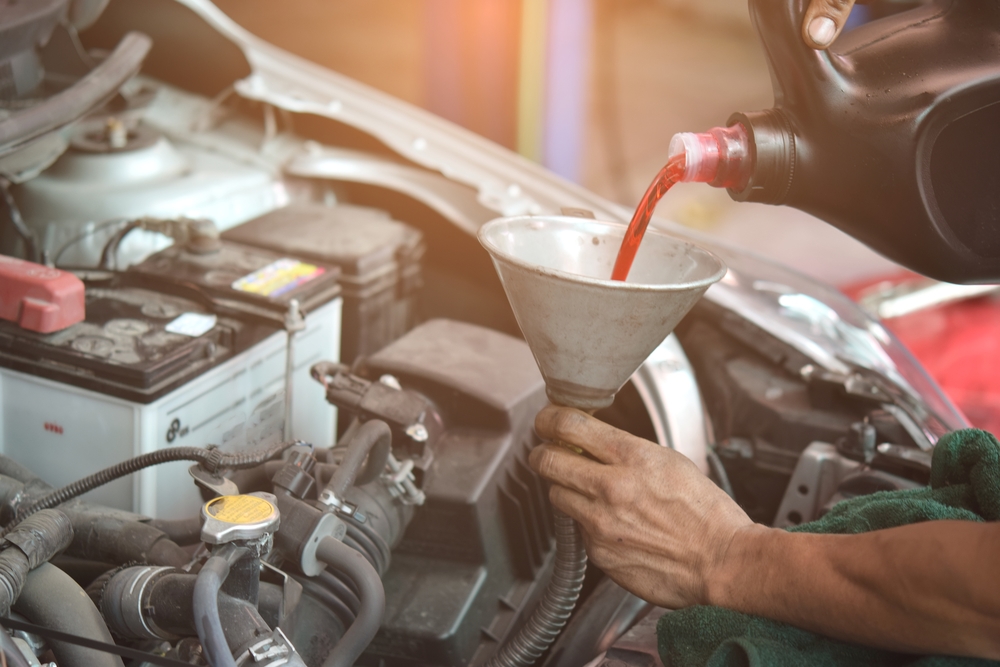
- Flushing vs topping off: Some transmission fluid services will involve completely flushing out old fluid and replacing it with new, while others may simply top off the existing level. The best approach for your vehicle can vary based on factors like its age and condition.
- Filter replacement: In some cases, a transmission fluid service may also include replacing the transmission filter. This is responsible for trapping debris and contaminants that could otherwise cause serious damage to the transmission system.
- Inspection: During a transmission fluid service appointment, our trained technicians will thoroughly inspect all components of your vehicle’s transmission. This can help identify any potential issues early on before they become major problems that would require expensive repairs or replacements, including possible worn seals.
At Tip Top Transmissions, we’re here to help with transmission fluid service and various other transmission services and auto repair needs in SLC. Contact us today to schedule an appointment!